Meta Ads + AI in 2026: Benefits, Challenges & How It Works
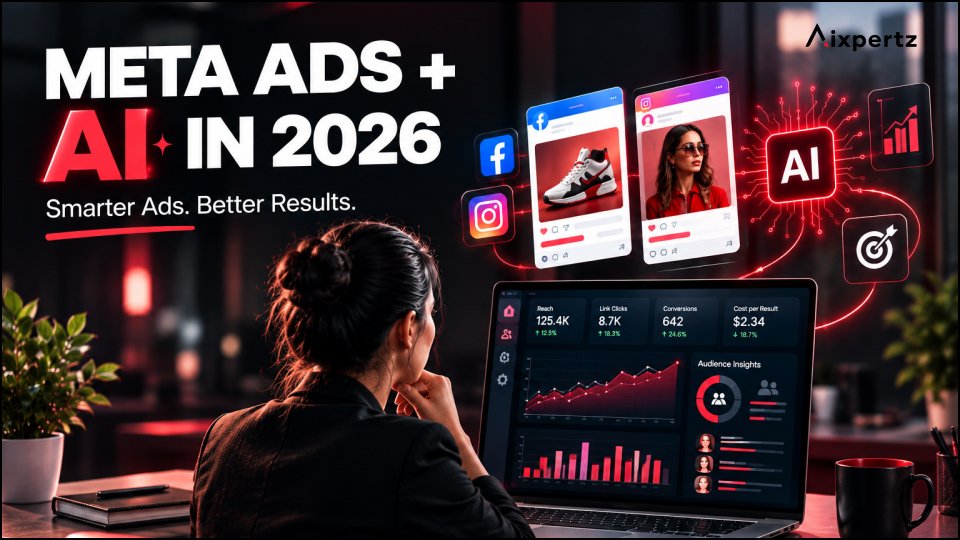
Introduction Digital advertising is changing. Businesses no longer rely only on manually selecting audiences, placements, and ad variations. Artificial intelligence (AI) and automation now play an important role in how advertising campaigns are created, delivered, and optimised. Meta Ads, which allow businesses to advertise across platforms such as Facebook and Instagram, are part of this shift. But what does AI actually do inside Meta Ads? Does it make advertising easier? Can businesses depend on automation completely? The answer is more balanced: AI can support campaign delivery and optimisation, but strong results still depend on clear goals, relevant creatives, accurate measurement, and human decision-making. In this guide, we’ll explore how Meta Ads and AI work together, their advantages and limitations, and how businesses can use them more strategically. What Are Meta Ads? Meta Ads are paid advertisements that businesses create through Meta’s advertising tools to reach audiences across its platforms. Businesses can use Meta Ads to work towards different objectives, including: Brand awareness Website traffic Lead generation Sales and conversions App promotion Advertisers can define their campaign objectives, prepare ad creatives, set budgets, choose available audience options, and monitor performance through Ads Manager. However, reaching the right people at the right time is not always a simple manual process. This is where AI-powered advertising systems become useful. How Does AI Work in Meta Ads? AI in Meta advertising uses machine learning to help predict which ads may be relevant to people and support advertisers’ campaign objectives. Meta explains that its advertising system uses machine-learning models to help select and rank ads for people. These systems consider available signals and predictions to determine which ads may be relevant. Read more about Meta’s AI-powered advertising system Here is a simplified view of the process: 1. The Advertiser Sets a Campaign Goal First, the business decides what it wants to achieve. For example, a clothing store may want to increase online purchases, while a training institute may want to generate student enquiries. The campaign objective helps guide how the advertising system delivers the ads. 2. AI Uses Available Signals The advertising system uses available information and machine-learning predictions to help determine which ads may be relevant to different people. These predictions can support ad selection and delivery. The process is not simply about showing the same advertisement to everyone. 3. Ads Are Delivered Across Placements Depending on the campaign settings and available options, ads may appear across Meta platforms and placements. This can include Facebook and Instagram feeds, Stories, Reels, and other eligible placements. 4. Performance Is Measured Advertisers can review campaign results through Ads Manager. The results may include reach, impressions, clicks, leads, conversions, and cost-related metrics, depending on the campaign objective and tracking setup. 5. Campaigns Can Be Optimised AI-powered systems can support parts of campaign optimisation. However, advertisers still need to review the results and make decisions based on their business goals. What Is Meta Advantage+? Meta Advantage+ is a collection of advertising automation features designed to help advertisers automate or optimise certain parts of their campaigns. Depending on the campaign type and settings, these features may support areas such as audience selection, placements, budget allocation, and creative enhancements. The purpose of automation is to simplify parts of campaign management and help advertisers use the platform’s optimisation capabilities. However, automation does not mean that every campaign will automatically achieve its business goals. Advertisers still need to provide suitable creatives, select an appropriate objective, monitor performance, and evaluate results. For more information, visit Meta’s overview of AI and advertising automation Benefits of Using AI in Meta Ads AI-powered advertising can support businesses in several ways. The actual impact depends on the campaign, business goals, creative quality, budget, and measurement setup. 1. More Efficient Campaign Management Automation can reduce the need to manually manage every campaign element. This may help advertisers spend more time on planning, creative development, and reviewing business outcomes. 2. Support for Audience Reach Machine-learning systems can help predict which ads may be relevant to different people. This supports the process of delivering advertisements based on campaign objectives and available signals. 3. Creative Optimisation Some advertising features can help adapt or enhance creative assets for eligible placements. Businesses should still make sure that the original images, videos, and messages represent their brand accurately. 4. Data-Based Decisions Campaign reporting helps advertisers understand how their ads are performing. By reviewing relevant metrics, businesses can identify areas that may need improvement instead of making decisions based only on assumptions. 5. Support for Different Business Goals Businesses may use Meta Ads for awareness, traffic, lead generation, or sales. AI-powered features can support campaign delivery, while the advertiser remains responsible for choosing the objective and evaluating whether the campaign contributes to the intended result. Challenges of AI in Meta Ads Although automation can be useful, businesses should understand its limitations before depending on it. 1. Less Manual Control Automated features may reduce the amount of manual control available over certain campaign elements. Advertisers should understand the settings they are using and review whether they match their campaign requirements. 2. Creative Quality Still Matters AI cannot replace a clear message or a relevant offer. If an advertisement does not communicate the product’s value, the audience may not respond as expected, even when automated delivery is enabled. 3. Tracking and Measurement Issues Campaign optimisation depends partly on the quality of available measurement signals. Incorrect tracking, missing events, or poorly configured conversion measurement can make it difficult to understand campaign performance. 4. No Guaranteed Results Using AI does not guarantee leads, sales, or a specific return on investment. Campaign outcomes can depend on several factors, including the offer, competition, budget, landing page experience, creative quality, and audience response. 5. Human Oversight Is Necessary Businesses still need people to review campaign performance, understand customer needs, check brand messaging, and make strategic decisions. Automation should support the marketing process—not replace responsible decision-making. A Practical Example: How a Business Can Use AI in Meta Ads Imagine a small online business